Travelling is supposed to be enjoyable, whether you are heading off on holiday or visiting family overseas. But after hours on a plane, followed by carrying luggage through airports and getting in and out of cars, you might arrive feeling more exhausted than expected.
Your neck feels stiff, your lower back starts aching, and your ankles may look a little swollen. Sometimes, you even feel worse after getting home than you did before leaving.
Long-haul flights can be hard on the body, especially when you spend hours sitting in the same position. Add heavy suitcases and awkward lifting to the mix, and it is easy to see why travelling can leave you feeling sore.
The good news is that a few simple habits can make the journey more comfortable. Understanding what causes the discomfort can also help you know when it is time to get checked.
Why Do Long Flights Leave You Feeling Stiff?
One of the main reasons is sitting still for too long.
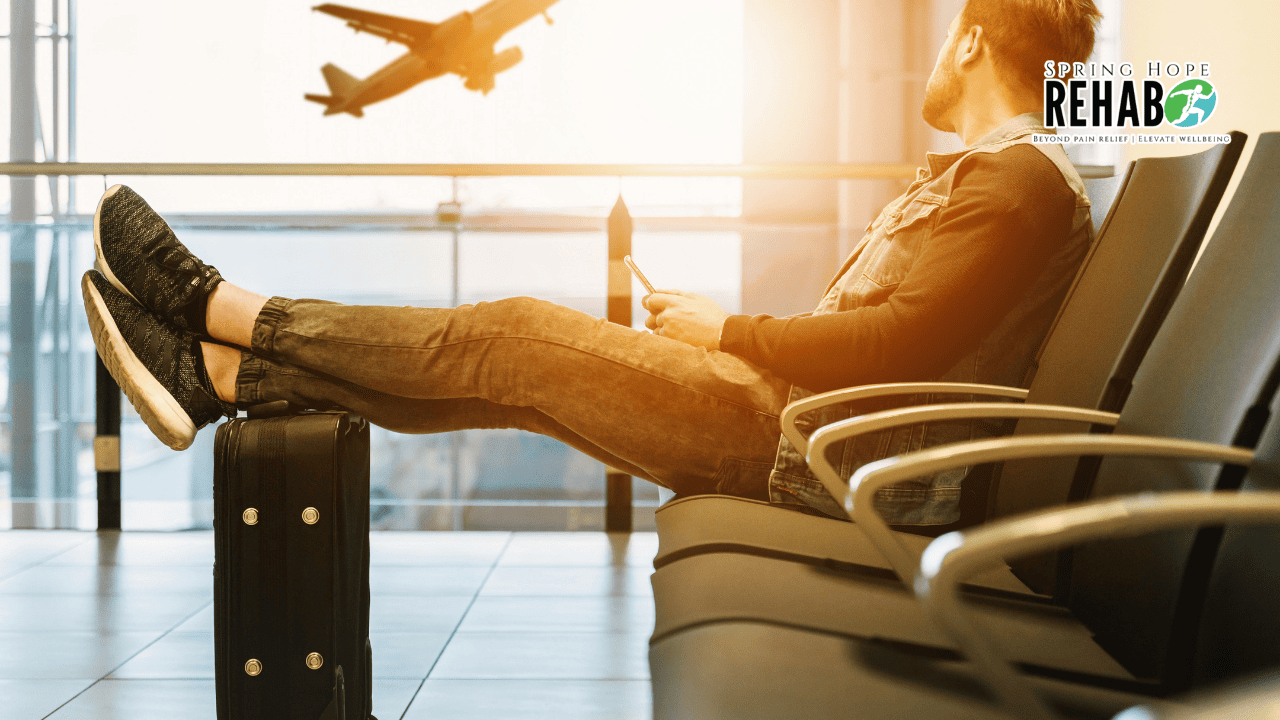
On a long flight, you might spend several hours in a seat with limited legroom, barely changing your position. Your hips and knees stay bent, your back remains in roughly the same posture, and your neck may end up at an awkward angle, especially if you fall asleep.
Over time, your muscles and joints can start to feel stiff and uncomfortable.
You might notice it most in your lower back, neck and shoulders. Even if you start the journey feeling fine, staying in one position for hours can make it harder to get comfortable.
This is not just a problem during flights. Long car journeys and train rides can have a similar effect.
Whenever possible, try not to stay in the same position for the entire journey. Changing your posture, moving your shoulders and legs, and getting up for a short walk when it is safe can help break up those long periods of sitting.
Swollen Ankles and Circulation: What Should You Know?
Have you ever noticed that your shoes feel tighter after a long flight?
This can happen because fluid builds up in the lower legs and feet when you sit for extended periods. Mild swelling around the ankles is fairly common after long journeys and often improves once you start moving around again.
However, there is another issue worth knowing about.
Sitting still for a long time can increase the risk of developing a blood clot in the deep veins, usually in the legs. This is known as deep vein thrombosis (DVT). Although it does not happen to everyone, the risk is higher for some people, including those with certain medical conditions or a history of blood clots.
During a long flight, try to move your ankles and legs regularly, and get up to walk around when it is safe to do so. Drinking enough water is also sensible, although hydration alone does not prevent blood clots.
If you have a history of blood clots or other risk factors, speak with your doctor before travelling to find out whether you need any additional precautions.
Be alert to unusual pain or swelling in one leg, particularly if it comes with warmth or redness. These can be signs of DVT and need prompt medical assessment. If you develop sudden shortness of breath or chest pain, seek emergency medical care.
The Hidden Cause of Travel-Related Back Pain: Luggage
Sometimes, the flight itself is not the main reason your back hurts. The problem starts when you handle your luggage.
Think about the number of times you lift a suitcase during a trip. You pull it off the baggage carousel, lift it into an overhead compartment, carry it up stairs or load it into the boot of a car.
These movements can put extra strain on your back, particularly when the bag is heavy or you have to twist your body while lifting.
A few simple changes can help make luggage handling easier:
- Keep the bag close to your body. Reaching out to lift a heavy suitcase puts more strain on your back.
- Bend your knees when lifting from a low position. Try to avoid bending forward from the waist while lifting a heavy bag.
- Avoid twisting while carrying a load. Turn your feet and body together instead of twisting your back.
- Be careful with overhead compartments. Lifting a heavy suitcase above shoulder height can be difficult. Ask for help if you cannot lift it comfortably.
- Pack only what you need. A lighter suitcase is easier to handle throughout the journey.
- Use luggage with wheels where practical. This reduces the need to carry your bag over longer distances.
You do not have to wait until your back starts hurting to make these changes. Being mindful of how you handle luggage can help reduce unnecessary strain throughout the trip.
Simple Ways to Feel More Comfortable While Travelling
You cannot always avoid long periods of sitting, especially on an international flight. But there are a few things you can do to make the journey easier on your body.
Move whenever you can.
Change your sitting position regularly, move your ankles and legs, and get up for a short walk when it is safe. Even small movements can help break up long periods of sitting.
Give your back and neck some support.
Try adjusting your seat and using a small travel pillow or rolled-up clothing to support your neck or lower back if needed. The aim is to find a comfortable position rather than forcing your body to stay perfectly straight.
Avoid staying in one position for too long.
You might not be able to walk around whenever you want, but you can still make small adjustments while seated. Moving your shoulders, changing your leg position and gently moving your ankles can help.
Stay hydrated.
Drink water regularly throughout the journey. You may also want to limit alcohol, as it can contribute to dehydration and make you feel worse after a long trip.
Take your time with luggage.
There is often a rush to get off the plane, collect your bags and move on to the next part of the journey. If you are carrying a heavy suitcase, take a moment to position yourself properly before lifting it.
None of these habits needs to be complicated. The main idea is to avoid putting your body under unnecessary strain for hours at a time.
When Should You Seek Help?
Feeling a little stiff after a long journey is common, and mild discomfort often improves once you return to your usual activities.
However, do not ignore pain that continues after the trip, keeps coming back or makes it difficult to move around normally.
It is worth getting an assessment if:
- Back, neck or joint pain does not improve after returning home
- Pain started after lifting a heavy suitcase and continues to bother you
- You have difficulty bending, walking or carrying everyday items
- The discomfort is getting worse rather than improving
- You notice persistent swelling or other unusual symptoms
As mentioned earlier, pain or swelling in one leg after a long flight needs prompt medical assessment, particularly if the area is warm or red. Sudden chest pain or difficulty breathing requires emergency care.
For ongoing aches and movement problems after travelling, a registered physiotherapist can assess your symptoms and help you work out what may be contributing to the discomfort.
If travelling to a clinic is inconvenient, a home-based Physiotherapy Clinic can provide an assessment and physiotherapy care at home.
A doctor may also be needed if the symptoms are severe, persistent or suggest a medical problem that requires further investigation.
Key Takeaways
- Sitting in the same position for hours can leave your back, neck and shoulders feeling stiff after a long flight.
- Mild ankle swelling can happen during long journeys, but prolonged immobility also increases the risk of blood clots.
- Moving your legs regularly and walking around when it is safe can help reduce the effects of prolonged sitting.
- Heavy or awkward luggage can put extra strain on your back, so lift carefully and ask for help when needed.
- Adjusting your sitting position, taking movement breaks and staying hydrated can make long journeys more comfortable.
- Persistent pain should be assessed, while possible signs of a blood clot need prompt medical attention.
Conclusion
Long-haul travel can be tiring enough without arriving home with a sore back, stiff neck or aching legs.
You cannot always avoid sitting for hours, but you can make the journey a little easier on your body. Move when you can, change your position regularly and be careful when lifting heavy luggage.
It is also worth paying attention to how you feel after the trip. Mild stiffness may settle with normal movement and time, but pain that persists or starts affecting your daily activities deserves a closer look.
If the discomfort does not improve, a qualified physiotherapist or doctor can help you understand what might be causing it and what to do next.
The information provided in this post is for general educational purposes only and does not constitute medical advice. Please consult a qualified healthcare professional or a registered physiotherapist for an assessment of your individual condition.