
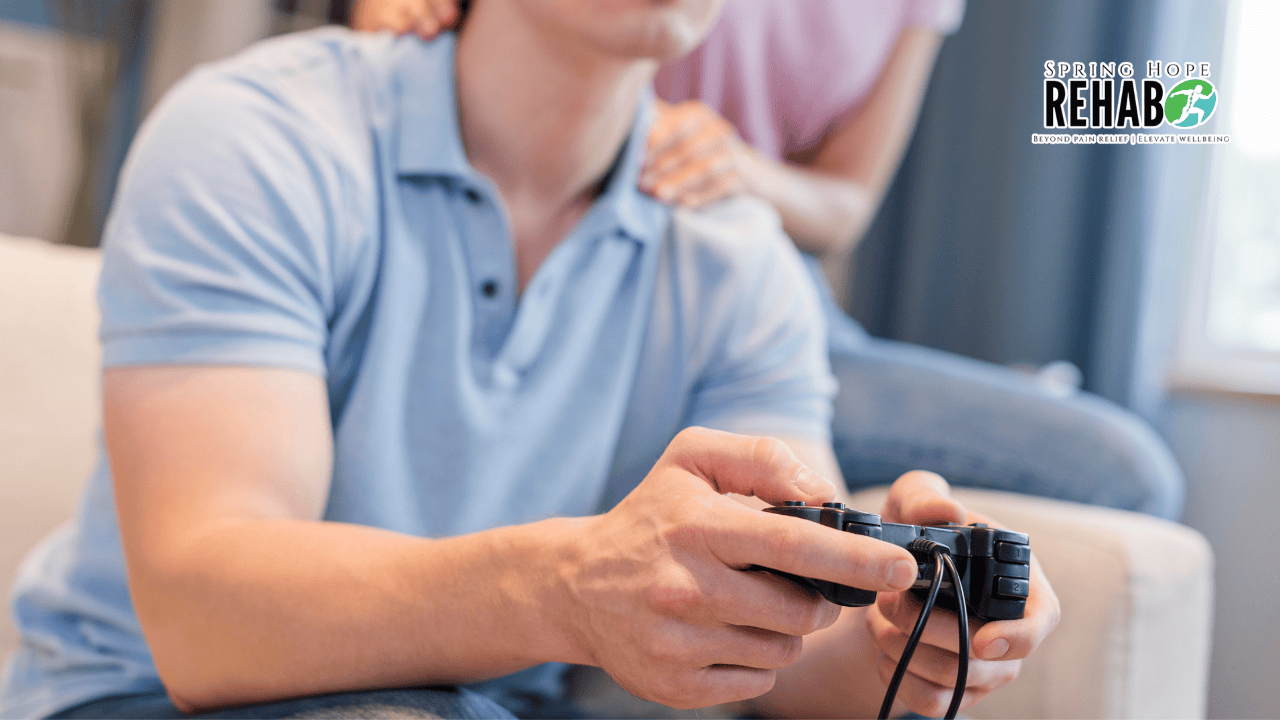
Gaming can be surprisingly demanding on the hands.
During a long session, your thumbs may be moving almost constantly, your fingers are pressing buttons over and over, and your hand stays wrapped around a controller or phone for hours. Most of the time, you probably do not notice it.
But after a few long sessions, you may start to feel it. Maybe there is an ache around the base of your thumb, some stiffness in your fingers, or a tired feeling through your wrist and forearm.
That does not necessarily mean you need to stop gaming. It is more about giving your hands a chance to recover and avoiding hours of the same movements without a break.
Here are some of the common hand and wrist problems gamers can experience, along with a few simple habits that can help.
Why Does Gaming Put Strain on the Hands?
Your thumbs and fingers may be doing most of the visible work, but the muscles controlling them are largely located in the forearm. Tendons then connect these muscles to the fingers and thumb.
During gaming, these muscles and tendons can be working repeatedly for long periods. On a controller, that might mean pressing buttons, moving joysticks and holding the controller firmly. On a phone, it can mean constant tapping, swiping and scrolling.
One button press is unlikely to cause a problem.
The issue is doing the same small movements hundreds or thousands of times while keeping your hand in roughly the same position.
The longer the session, the less time the muscles and tendons have to rest. If you do this regularly without enough recovery, discomfort can gradually build up.
Common Hand and Wrist Problems Gamers May Notice
Pain around the base of the thumb
One problem that can affect people who use their thumbs repeatedly is De Quervain’s tenosynovitis.
It causes pain around the base of the thumb and along the thumb side of the wrist. The pain may become more noticeable when gripping, lifting or moving the thumb.
The condition is associated with repetitive thumb and wrist movements, and activities involving mobile phones and gaming devices can contribute to this type of strain.
Mobile gaming can be particularly demanding because the thumbs often handle most of the controls. Holding a phone for long periods can also keep the hands and wrists in the same position for extended periods.
Fingers that click, catch or lock
Another problem that can affect the fingers is trigger finger.
This happens when one of the tendons that helps bend a finger becomes irritated. You may notice clicking or catching when moving the finger, and in some cases, the finger can temporarily lock in a bent position.
Repetitive gripping and hand movements can contribute to irritation around the finger tendons.
Some people notice the stiffness or catching more clearly in the morning, while others mainly notice it when using the affected finger.
Tired or aching wrists and forearms
Not every gaming-related hand problem has a specific name.
Sometimes, the hands simply feel tired after a long session. The wrists may ache, the fingers can feel stiff, or the forearms may feel sore.
This can happen when the same movements are repeated for a long time without enough rest. It is often a sign that your hands need a break rather than something to simply push through.
Simple Habits That Can Help
The easiest thing you can do is also one of the most useful: take regular breaks.
You do not need to stop gaming altogether. Breaking up long sessions gives your hands and wrists some time away from the repetitive movements.
A few habits worth trying include:
- Take short breaks during longer gaming sessions instead of playing for several hours without stopping.
- Put the controller or phone down during your breaks and let your hands relax.
- Avoid gripping the controller more tightly than necessary.
- Change your hand position from time to time if possible.
- Give your hands a break if you have already spent most of the day typing or using your phone.
- Pay attention to early aches rather than waiting until the pain becomes difficult to ignore.
- If a particular game or control setup seems to make your symptoms worse, consider changing how you hold the device or taking more frequent breaks.
You can also think about your overall routine. If you spend eight hours typing at work and then several more hours gaming or using your phone, your hands may not be getting much recovery time during the day.
The goal is not to eliminate the activity. It is to avoid giving your hands the same workload continuously for hours on end.
When Should You See a Professional?
A little hand fatigue after a long gaming session will often settle after some rest.
However, it is worth getting your hand or wrist assessed if:
- Pain around the thumb keeps coming back
- Pain continues between gaming sessions
- A finger starts clicking, catching or locking
- Your grip feels weaker than usual
- Stiffness or discomfort is getting worse
- Symptoms are affecting everyday activities, not just gaming
You do not have to wait until the pain becomes severe before getting help.
A registered physiotherapist can assess your thumb, fingers, wrist and forearm and look at the movements or activities that may be contributing to the problem. They can also suggest practical changes to help you return to gaming more comfortably.
For those who prefer to be seen at home, a home-based Physiotherapy Clinic can provide an assessment and physiotherapy care without needing to travel to a clinic.
If symptoms are persistent, worsening or difficult to explain, a doctor or other qualified healthcare professional can also help determine what is causing them.
Key Takeaways
- Gaming involves a lot of repetitive thumb and finger movements, particularly during long sessions.
- Holding a controller or phone for hours can also keep the hands and wrists in the same position for too long.
- Pain around the base of the thumb can be associated with De Quervain’s tenosynovitis.
- Clicking, catching or locking of a finger can be a sign of trigger finger.
- Regular breaks, a relaxed grip and changing activities can give the hands more time to recover.
- Persistent pain, weakness or finger locking is worth having assessed by a qualified professional.
Conclusion
Gaming itself is not necessarily a problem for your hands. The bigger issue is what happens when a long session turns into several hours of the same movements without a break.
Your thumbs and fingers do a lot of work while you play, even if you barely notice it. Giving them regular breaks, avoiding an unnecessarily tight grip and paying attention to early signs of discomfort can make long gaming sessions much easier on your hands.
If an ache disappears after some rest, that may simply be your hands telling you they need a break. But if the pain keeps coming back, a finger starts catching or your grip becomes weaker, it is worth getting it checked.
A qualified physiotherapist or doctor can help identify the cause and work out what changes may help you get back to gaming comfortably.
The information provided in this post is for general educational purposes only and does not constitute medical advice. Please consult a qualified healthcare professional or a registered physiotherapist for an assessment of your individual condition.