Grip is one of those things most people never really think about until it becomes a problem.
A jar suddenly feels impossible to open. Carrying a grocery bag becomes uncomfortable. Even turning a door handle can take more effort than it used to.
It is easy to put these changes down to getting older or having a sore hand. But grip strength can tell us quite a bit about how the hands and forearms are functioning, and sometimes about general strength too.
There is also a common misconception about what to do when grip becomes weak or uncomfortable. The natural reaction is often to stop using the hand and give it as much rest as possible. While some rest can be helpful when something is irritated, avoiding movement and loading for too long can leave the hand and forearm weaker.
For many people, gradually building the right amount of strength is a better long-term approach.
What Does Grip Strength Tell Us?
Grip strength is the amount of force you can produce when using the muscles in your hand and forearm.
It is often used as a simple way of looking at upper limb function. Grip strength can also give an idea of overall muscle strength, which is one reason it is commonly measured in health and rehabilitation settings.
Grip strength naturally changes throughout life. It generally reaches its highest level in adulthood and gradually declines as we get older. That makes maintaining strength increasingly useful as part of staying active and independent.
It is not just about having a strong handshake. Good grip strength helps you do many of the ordinary things you rely on your hands for every day.
Why Does a Weak Grip Make Everyday Tasks Harder?
Think about how many things require you to grip, hold, squeeze or turn something.
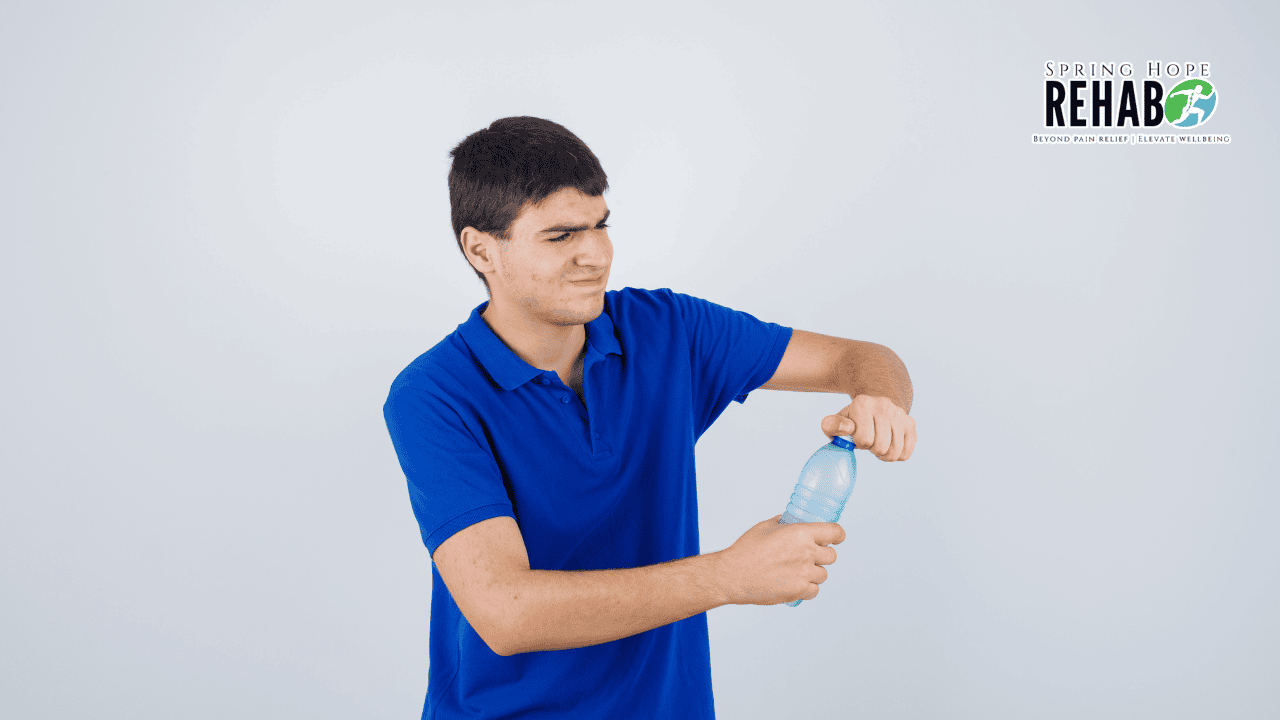
Opening a tight jar, carrying shopping bags, holding a suitcase, turning a tap or opening a door all require some level of grip strength.
When that strength drops, these simple tasks can suddenly feel much harder.
Pain can make things even more difficult. If gripping hurts, you may naturally start using the hand less or avoiding certain movements altogether. Over time, this can contribute to further weakness and make the original activity feel even more challenging.
A weak grip does not always mean there is a serious problem. It can be related to something as simple as reduced activity, an old injury or overuse. But if the change is noticeable or continues to get worse, it is worth finding out why.
Why Gradual Loading Can Help
When your hand or forearm hurts, resting it completely can feel like the safest option.
And if you have just irritated an area, taking a short break from activities that make the pain worse can certainly make sense. The problem is when rest becomes the only strategy for a long period.
Muscles and tendons need some level of loading to stay strong and capable. When they are not being used, they can gradually lose strength and become less able to handle everyday demands.
This is why rehabilitation often involves gradually bringing movement and resistance back into the picture.
The key word is gradually.
You do not need to suddenly start lifting heavy weights or squeezing a grip trainer as hard as possible. The idea is to give the hand and forearm an appropriate amount of work, then slowly increase the challenge as the tissues become stronger and more comfortable with the load.
Too little activity may not provide enough stimulus to rebuild strength. Too much too soon can aggravate an already painful area.
Finding the right balance is especially important when pain is involved. A registered physiotherapist can assess the problem and help determine what type and amount of exercise is appropriate for you.
When Is a Grip Problem Worth Checking?
Not every change in grip strength needs professional attention. But it is worth getting checked if you notice things such as:
- Everyday activities like opening jars or carrying bags are becoming noticeably harder
- Your grip has become weaker over a relatively short period
- Gripping objects is consistently painful
- Pain continues after you stop the activity
- Weakness comes with numbness or tingling
- There is swelling around the hand, wrist or forearm
- The problem is affecting your confidence or independence with everyday activities
A sudden or significant loss of strength, particularly if it affects only one hand, should not simply be ignored. It is better to have it assessed and find out what is causing the change.
How Can a Physiotherapist Help?
A physiotherapist can look at your grip strength, hand and forearm movement, and how the problem affects your everyday activities.
They can also help work out whether the issue is related to weakness, overuse, an old injury or something that needs further medical assessment.
If strengthening is appropriate, they can put together a gradual programme based on your current ability. The exercises can then be adjusted as your strength and tolerance improve.
For people recovering from an injury or surgery, or those who simply find it easier to receive care at home, a home-based Physiotherapy Clinic can provide an assessment and rehabilitation at home.
If you have ongoing pain, significant weakness or a sudden change in grip strength, it is also important to speak with a doctor or other qualified healthcare professional.
Key Takeaways
- Grip strength comes from the muscles in the hand and forearm and is an important part of everyday hand function.
- Many simple activities, including opening jars, carrying bags and turning handles, depend on grip strength.
- Grip strength naturally changes with age, which makes maintaining strength increasingly important.
- Rest can be useful when an area is irritated, but avoiding movement and loading for too long can lead to further weakness.
- Gradually increasing the amount of work your hand and forearm can handle can help rebuild strength and tolerance.
- Persistent pain, noticeable weakness, numbness or a sudden change in grip strength should be assessed by a qualified professional.
Conclusion
You probably do not think about your grip very often. You just use it.
That is why it can be frustrating when something as simple as opening a jar or carrying a shopping bag suddenly becomes difficult.
A weak or painful grip is not necessarily something you just have to live with. In many cases, the hand and forearm can become stronger again with the right amount of movement and gradual loading.
The important part is not to do too much too quickly. If you are not sure what is causing the problem or how much exercise is appropriate, a physiotherapist can help you work it out.
And if the weakness comes on suddenly, keeps getting worse or is accompanied by other symptoms such as numbness or tingling, get it assessed rather than simply trying to work around it.
The information provided in this post is for general educational purposes only and does not constitute medical advice. Please consult a qualified healthcare professional or a registered physiotherapist for an assessment of your individual condition.